
Arrest Warrants in Carter County
An arrest warrant in Carter County is a judge's order to take someone into custody, built on probable cause, the standard that says the evidence is strong enough to move a criminal case forward. The Tennessee General Assembly publishes the controlling statutes, so anyone quoting exact language should read the current code rather than rely on a summary. Keep the steps distinct. Issuing the warrant, serving it, booking the person, and the court action that follows are each separate record events. A docket line or a booking entry shows only its own step, not the live order itself, so the issuing court remains the place that confirms what is still active.
Carter County Probable Cause Warrants
Carter County probable cause warrants usually start with a complaint or an affidavit filed for a judge or magistrate to review. The magistrate weighs the facts, and only then issues process if probable cause holds. Do not expect to read the application itself. The supporting affidavit is often kept out of the public docket, mainly when the matter is sealed or a court order restricts it. For the exact statutory wording, the Tennessee General Assembly is the official source, and any legal citation should be checked there before you rely on it. One more caution: an arrest warrant is not a booking record. They answer different questions.
What a Carter County Arrest Warrant Contains
Carter County publishes no standard arrest-warrant form or single warrant-number pattern for the public. What the county's criminal dockets do show is a set of case fields. Those can include a cause number, the charge or count, counsel, a bond or process notation, the disposition, the next setting, the judge, and the docket date. Those are docket fields, though. A warrant document may not display every one of them.
| Warrant number | No single Carter format was verified; the docket cause number may be different. |
|---|---|
| Person named | Keep names and personal identifiers out of public examples. |
| Charge or count | Use the issuing court file for its exact wording. |
| Court or judge | Check the docket heading and court listed on the papers. |
| Bond or process | Ask the clerk or counsel what a docket notation means today. |
| Issue date | A later service, recall, or disposition date may differ. |
Carter County Booking vs Warrants
The sheriff's inmate roster answers one question only: who is in custody. It lists a booked date, a charge description, and other booking fields, which makes it a custody and booking display rather than a warrant list. Treat it as an open-warrant index and you will be misled, because Carter County's roster is not that. A release shown there does not mean the court recalled anything either. For the court side of a case, use the official Circuit Criminal docket or the General Sessions route, then call the issuing clerk for current status. Each system answers a different question.
How Carter County Arrest Warrants Are Served
Courts issue the warrant, and law enforcement serves it. The Carter County Sheriff's Office describes warrant service within its general agency mission, but it posts no public warrant-unit page or service-count report. Its divisions page lists patrol and other functions without naming a public warrant counter. After an arrest, a booking or detention record may follow. One practical tip: the sheriff's resource map places the courthouse, the sheriff's office, and the detention center at separate sites, so confirm which location handles your errand before you drive.
Carter County Juvenile Warrants
Juvenile records sit behind a strict confidentiality line. In Tennessee, Rule 114 governs privacy in juvenile and family proceedings, and its text is the official statement of that boundary. A public adult docket search in Carter County will not reveal what a restricted juvenile file holds. A blank result proves nothing about whether juvenile process exists. The court itself can tell an authorized person the proper access route.
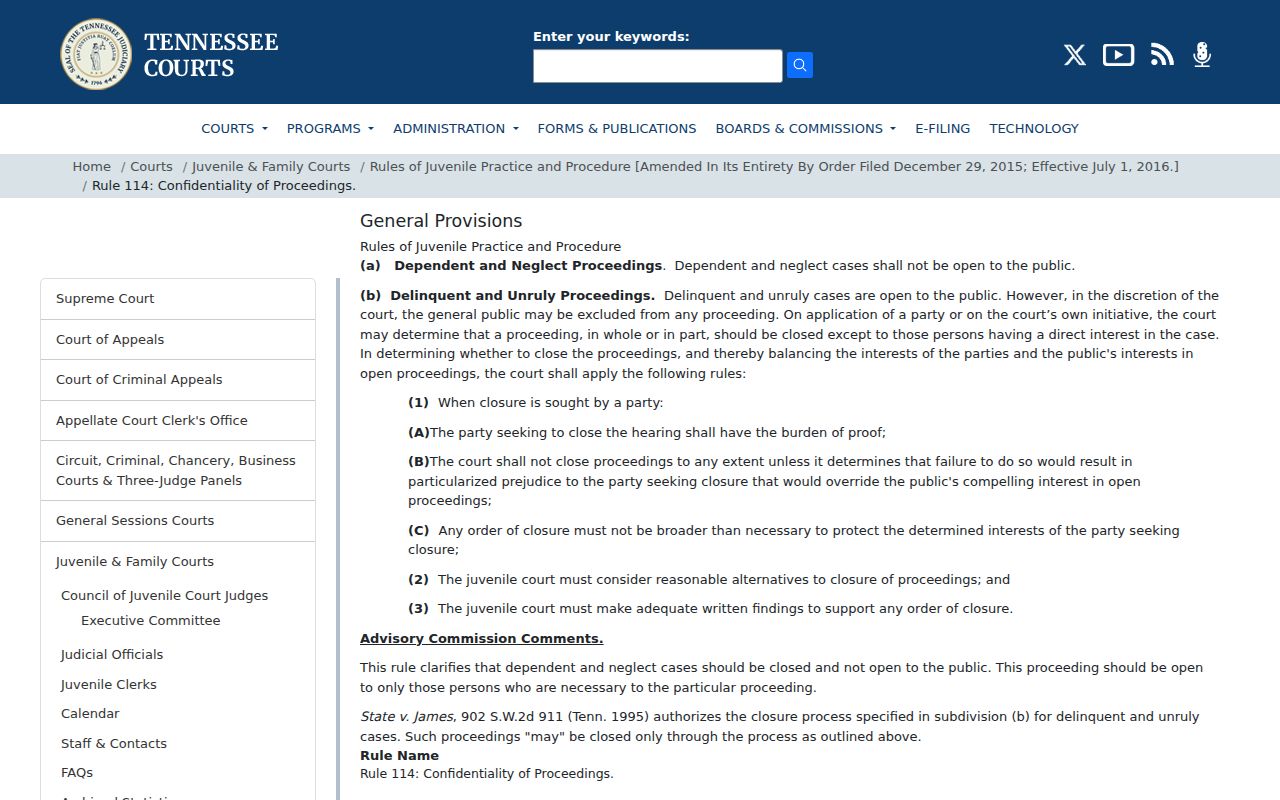
This image shows an access rule, not a case search or status page.
Arrest Warrant vs Summons vs Bench Warrant
These three serve different roles. A summons orders someone to come to court on their own. A bench warrant can follow when a court obligation goes unmet, while an arrest warrant rests on a probable-cause finding and authorizes custody. In Carter County, the right record to pull and the right response depend on the issuing court and the case.
| Process | What starts it | Where to confirm |
|---|---|---|
| Arrest warrant | Probable-cause court review | Issuing court and agency record route |
| Summons | Order to appear on a date | Court named on the notice |
| Bench warrant or capias | Missed or unmet court obligation | Court that set the underlying case |
Carter County Federal Warrants
Federal warrants tied to Carter County route through the Eastern District of Tennessee's Greeneville/Northeastern division, and the court's own division list names Carter County among the counties it covers. A county clerk or a sheriff's roster cannot certify federal status, so do not treat them as if they could. The official district court site links to PACER and to courthouse contacts, which is where federal questions go, along with the federal clerk, counsel, or the right agency. The U.S. Marshals' Eastern District page describes task-force work in the region. That page is not a countywide warrant list, and the Marshals operate under their own jurisdiction.
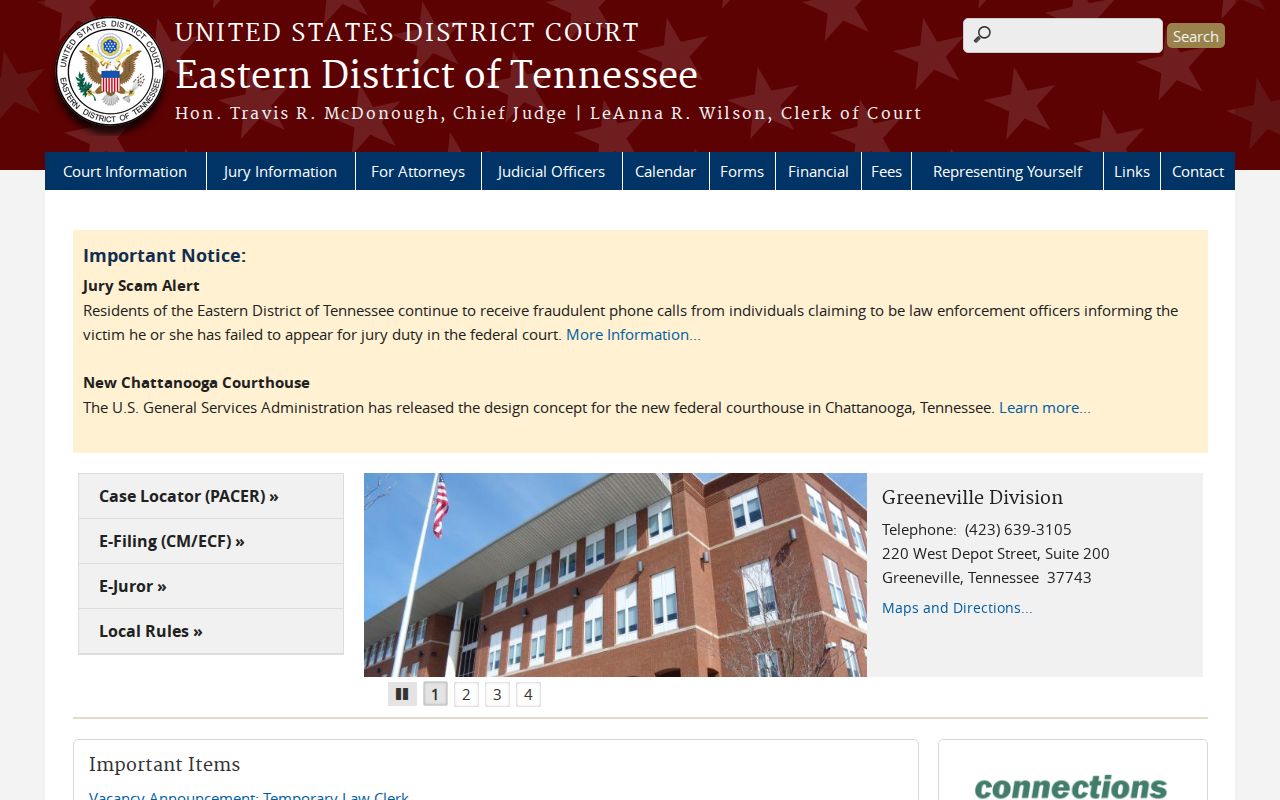
Federal court pages serve a separate jurisdiction and do not replace local records.
What to Do If There’s a Warrant for You
Tennessee's Rule 34 opens court records to the public, though seals and protective orders can carve out exceptions. The state's Public Records Act covers records that already exist, and it does not force any Carter County office to build a new warrant database on request. When files sit offline, a written request works best. Name the office, the record type, the date range, and the format you want. Leave personal identifiers out of anything filed in public.
Handling an Arrest Warrant in Your Name
An arrest warrant in your name deserves prompt attention. Ask the issuing clerk in Carter County how to verify the current record, and talk with a Tennessee attorney before you arrange an appearance. Counsel may walk you through voluntary surrender, bond, or a motion to recall or quash the warrant. No phone call or payment on its own changes the court's order.
Important: Confirm the issuing court and speak with counsel before acting. The sheriff, a booking page, or a third-party result cannot explain every court order.
The Carter County warrant resolution steps show how to route a status question to the right clerk.